Tuesday, 17 August 2010

Devious Pay Rise

Govt accused of devious tactics in lawmakers' pay rise

  • Published: 18/08/2010 at 12:00 AM
  • Newspaper section: News
The Abhisit government is being accused of underhand tactics by slipping a huge salary upgrade for MPs and senators into the royal decree for a civil servant pay rise due in April.
The cabinet on Monday approved in principle the plan to increase salaries for civil servants by 5%. But without any previous announcement it furtively added a 15% pay increase for lawmakers, the Puea Thai Party claimed.
Deputy Prime Minister Suthep Thaugsuban yesterday rejected criticism of the civil service pay rise but did not address the 15% bonus for lawmakers.
A cabinet source said a draft royal decree sought pay rises for the entire public sector, including teachers, police and soldiers, giving them an extra 5% on their monthly salaries.
But the salaries of members of public independent agencies and parliamentarians, with the exception of ministers, would rise by about 15%.
That would mean the monthly salary of an MP or senator would jump to 71,230 baht from 62,000. The salary of the house speaker would rise to 75,590 baht from 65,920.
Wisuth Chai-narun, an opposition Puea Thai MP for Phayao, lashed out at the government for sneaking in the salary increase for parliamentarians to avoid public criticism.
He said the government should have made the decision to increase salaries and allowances for parliamentarians public when it agreed to the pay rise for civil servants.
The public had a right to know how taxpayers' money was being spent.
Mr Wisuth criticised the government for trying to please civil servants and politicians by increasing their salaries while ignoring the plight of ordinary people, particularly the rural poor. Consequently it would face a barrage of criticism.
Deputy Prime Minister Suthep insisted the government had no hidden agenda in increasing salaries for government officials.
He said the increase was carefully studied before being approved. A pay rise was necessary to encourage officials to perform their duties more efficiently at a time of inflation and currency value changes.
Extra allowances for lawmakers would not be increased. Senators and MPs are given special allowances of 42,330 baht a month and the house speaker 50,000 baht.
The pay rise would take effect on April 1 with 13 billion baht from the 2011 fiscal year budget being allocated to cover it.
Deputy government spokesman Supachai Jaisamut said yesterday the cabinet had agreed to raise starting salaries for government officials as proposed by the Office of the Civil Service Commission.
The salary increase would make the civil service more competitive with private enterprise in hiring staff.
Bangkok Post

King Rat of NEP

King Rats of the NEP – William Leong

August 17, 2010
AUG 17 - Tan Sri Liew Kee Sin, chairman of SP Setia Bhd, provided statistics to show that Malaysian Chinese businessmen have prospered and fared well under the pro-bumiputra New Economic Policy.
He said Chinese individuals controlled 73% of the wealth owned by the top 40 richest Malaysians and make up eight of the top 10 richest Malaysians. The people know who these persons are. Some of them are not only among the richest in Malaysia but in the world.
The people also know how they made their fortunes in the past 40 years. The complaint is not that there is no Malaysian Chinese, Indian, Sikh, Kadazan, Dusun, Iban or other non-bumiputra who has found fame and fortune under the NEP. There will always be those who will thrive even in the most brutal and oppressive regimes.
The complaint is that due to the abuses of the NEP, Malaysians have been deprived of their inalienable right to seek a livelihood with dignity.
Malaysians irrespective of race or religion is entitled to the inherent dignity and inalienable equal right to a livelihood and a standard of living adequate for the well being of himself and his family.
Malaysians are entitled to seek a livelihood with dignity. They need not in the struggle for survival have to be like the King Rat in James Clavell’s novel who engaged in bribery, corruption and black market activities to survive in a Japanese POW camp.
The King Rat, an enlisted man without distinction in civilian life becomes a major power in the prison camp by being the most successful trader through bribery and corruption and black marketeer.
The Japanese gave the prisoners nothing other than filthy huts to live in and the bare minimum of food. Officers were reduced to wearing rags and were closed to losing their humanity. Even the senior officers had to come to the King Rat for help in selling their valuables to buy food.
The King Rat thrived in the brutal environment of deprivation of a prison camp. The abuses of the NEP or its bastardization as described by Datuk Seri Nazir Razak, have created an environment that has spawned King Rats.
The implementation of the NEP required the government to grant wide discretionary powers to officers in approving licenses, permits and other instruments to intervene in economic activities.
By wielding such powers, it allowed such officers opportunities to seek payments from business tycoons to street vendors to obtain licences or approvals. Hawkers and street vendors have to make under counter payments before they are granted licences to eke out their meager earnings.
Business tycoons have to pay much more for their projects to move. This has given rise to both petty corruption and grand corruption. How else can you make a living in a country ranked 56 in the Transparency International Corruption Perception Index?
Malaysians should not be subjected to such indignities.
Tan Sri Liew called on the Chinese businessmen to work with their Malay counterparts. This has been done from the outset of the NEP. The disingenuous did not wait for Tan Sri Liew’s call. Many contracts given to the Malays were subcontracted to Chinese contractors.
Class F contracts are only given to bumiputra contractors selected according to the personal discretion of government officers or local council mayors and not by open tenders. The Ali Baba system has put paid to the noble objective of granting contracts, licenses and permits to Malay businessmen to uplift their economic status.
After 40 years and billions of ringgit in contracts 82 per cent of the rural poor and 67 per cent of the urban poor are still Malays. So long as the majority of Malays remain in poverty, Perkasa and the extremists will claim that the NEP must be continued. The NEP will then stand for the Never Ending Policy.
One cannot blame the Chinese and non-bumiputra contractors taking on the jobs as second, third or even fourth hand sub-contractors. They also have to survive. They also have needs. Many of these sub-sub contractors end up not being paid for the work they have done.
In many instances, the contractors at the top have taken payments upfront leaving nothing for the sub-contractors.
I know of many Chinese and non-bumiputra subcontractors who end up being bankrupts in this way. Why should these sub-subcontractors be forced to earn a living in this way? If Class F contracts are awarded based on needs and not race, much grief and suffering would be avoided for all involved.
Tan Sri Liew pointed out examples of the spectacular gains made by Chinese businessmen under the NEP. It must however be noted that due to the restrictions imposed by the NEP especially under the Industrial Co-ordination Act and key economic areas, Chinese businesses are not a force in manufacturing and they are no longer owners of the number of banks and finance companies they had before the 1970’s.
During the 1980’s the Associated Chinese Chambers of Commerce and Industry have repeatedly complained that if foreign investors were exempted from the obligatory Bumiputra equity participation requirements in their Malaysian enterprises, why were Chinese enterprise forced to bear the same obligation. The complaints fell on deaf ears. The consequential result was the tie up between the Chinese entrepreneurs and Malays who were influential politicians or former top level bureaucrats (including military).
This was not the objective of the NEP. The NEP was intended to be the catalyst for mutually equal tie-ups between Chinese and Malay entrepreneurs to strengthen Malaysian companies’ economic resilience. Instead it became a mix between business and politics.
In the long run this did not portend well for a healthy business or social–economic environment.
Tan Sri Liew said business was all about profits and not politics. Businessmen are in the business to make money. The King Rat when asked by the British captain who liberated the prison why the King Rat was in a far better health and condition than the other ragged, emaciated and sickly prisoners, he replied that there was no harm in looking out for number one.
The British captain retorted it was no harm provided it was not at others’ expense. Similarly there is no harm to continue the NEP provided it is not at others’ expense. In reality the costs and expense is too high and disproportionate to the gains.
A brief example is more than sufficient to illustrate the point. Under the NEP between 1995 and 2000, the Seventh Malaysia Plan for primary education development allocated 96.5 per cent to the national primary schools which had a total environment of only 75 per cent.
The Chinese primary schools which had a total enrollment of 21 per cent was allocated with only 2.4 per cent while Tamil schools with 3.6 per cent of the total enrollment was allocated one per cent of the budget.
Despite announcements by the government on a reduction of reliance on racial quotas for admission to public universities in 2004, 128 students who obtained the best possible grade of 5A’s were denied their first choice of course in medicine. The only thing they have in common is that they are not bumiputras.
Deputy International Trade and Industry Minister Datuk Mukhriz Tun Dr Mahathir informed the Dewan Negara on July 27 2010 that SME Bank from 2006 to June this year approved a total of RM9.8 billion loans involving 5,447 applications and other programmes of which 90 per cent of the beneficiaries are bumiputra SMI’s.
According to the Federation of Chinese Malaysia Youth Section Strategy Research Committee Head Professor Dr Chin Yew Sin there are about 519,000 SMEs in Malaysia and they have not received loans from the SME Bank.
The costs of the NEP to Malaysia among others, is the thousands of primary school children who have to do with less, the lost to the nation of the hundreds of brilliant and talented scholars who cannot realise their full potential and hundreds of thousands of small and medium enterprises who face financial difficulties because of race.
The whole world has recognised that inequality within a nation and between nations leads to poverty and generally poorer living conditions. A socially equal system should achieve fairness in distribution and opportunity among everyone. The NEP cannot drive Malaysia out of its present social-economic quagmire.
Just as in the novel, where the King Rat becomes the strongest in an environment that rewards cunning, luck and strength, he in the end becomes food for someone stronger, Malaysia cannot sustain its development in an environment where the bastardization of the NEP rewards the cunning and the disingenuous.
The nation can only prosper where integrity, ethics and good governance are practised. The few Malaysian Chinese businessmen who have thrived under this restricted environment cannot justify the continuance of the NEP and the social and economic losses suffered by all the others.
William Leong Jee Keen is the Member of Parliament for Selayang

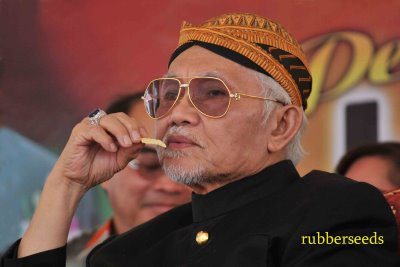
The White Rajah of Sarawak

August 18, 2010

EDITORIAL(www.freemalaysiatoday.com)–August 17, 2010

The MACC Untouchable White Rajah (Taib Mahmud) and His Business Empire

When the wealth of Sarawak Chief Minister Taib Mahmud was exposed to public viewing, the reaction was one of utter disgust. How could a political animal earning RM20,000 a month amassed such a colossal fortune? Where did he get all the extras? Was his massive business empire built on legitimate foundation? Or was it all ill-gotten gains? Of course, where he gets his money and what he does with it is his private affair. But when a person holds a high public office, he is no longer in control of his personal domain. It becomes public property and thus subject to scrutiny. If a person has nothing to hide, he has nothing to fear. Only when he covers his misdeeds, is he open to censure and even trial.
The most disturbing aspect of the whole sordid affair is that Sarawak, the largest state in Malaysia, is still mired in poverty while the man controlling its destiny is fabulously rich. The Land of the Hornbills was once ruled by the White Rajahs whose paternalistic reign lasted for 100 years. In all those years, the indigenous people were protected against exploitation. Then came eventual independence in the larger Malaysian federation.
And now comes another White Rajah who has been around for nearly 30 years. In that period, he grew powerful and became well-heeled. He ruled the state like as if it is his fiefdom. No one dared stepped on his toes, not even the federal masters, past or present.
But Taib is not living in the Stone Age. An intrepid news portal, The Sarawak Report, was all this while probing into his wealth. It followed his trail of affluence and discovered, to the horror of the public, the source of his minted money: he and his family members owned an “overseas business empire worth billions of ringgit”. When the pot of gold was unearthed, the White Rajah hit the roof and wanted the public to believe it is all lies. But the documented proof is solid and indisputable. It is pointless for him to claim innocence: the whole world knows his billionaire status. A public figure cannot run and hide in a hole and expect the storm to blow over. It won’t.
The tempest is still raging. The White Rajah must explain to quell the growing anger. He must speak the truth or resign on moral grounds. But he chose to keep quiet. He gives the impression that he is in total control of the situation. In the absence of his side of the story, the allegations against him stand: he made his pile from land, forestry, and palm oil concessions. Most of the projects went to his family members and cronies. They all became rich while the indigenous population – Melanaus, Ibans, Bidayuhs, Penans – continues to wallow in misery. The White Rajah stays in a palatial mansion but the indigenous people have to fight to keep their ancestral lands. In many encounters, they lost out to the combined might of the police, army and timber merchants. Taib does not want to share his wealth with his people. He does not want the natives to block his “rape”of the virgin environment.
Sarawak is rich in natural resources. Taib knows it. The people know it. But what Taib did not want the people to know is his plundering of the state’s wealth. For 30 long years he has been the master of all he surveys. During all those years, he could have used his power to enrich the people. Instead he enriched himself. He did have his dream. He told the people about his vision: he wanted to make Sarawak the richest state in Malaysia by 2030. Which means he wants to stay around for another 20 years. God forbid.

BN Fixed Deposit in Sarawak

Why rural S’wakians keep voting ‘feudal’ Taib

By Joseph Tawie

KUCHING: Chief Minister Taib Mahmud runs a ‘repressive’ government, one that is 'worse than the communist', says a local activist. Yet the rural people of Sarawak continue to vote him in. Why is that?
“It’s  because the government has perfected the method of making the people feel helpless. The government has created a situation where they (natives) are dependent. In everything they (natives) need, they can always depend on the government to provide,” said John Brian.

To further weaken the native network and strengthen his political hold over them, Taib has deviously pursued a divide and rule policy.

His latest is a new policy which splits the Dayak natives into ethnic groups – Iban, Bidayuh, Kayan, Kenyah, Penan, Kelabit and Lun Bawang.
An amendment to the Sarawak Interpretation Ordinance 2004, tabled and passed by the state assembly, has declassified the word 'Dayak'.
The term ‘Dayak' is now banned in all official government communication.

The move, said Brian, paves the way for Taib to pit one community against the other, keep them repressed and ensure his continued rule.

Sense of helplessness

According to him, years of  false indoctrination and purposeful exploitation of the native ignorance had contributed to a prevailing 'sense of helplessness’ in the rural areas.

He said not many in the rural and interior areas are educated and this works well for the government .

“The government has been lying and cheating the people by telling them how great their achievements are and how the country has progressed. When you are not educated, its easy to believe them.

“But if you go to the rural areas, nothing has changed: there are no roads, no clean water; and electricity. Healthcare is very poor and the mortality rate remains the highest in the country,” he said.

There are some economic activities provided for by the government via its Minor Rural Projects (MRP), but Brian notes in his blog DayakBaru that the MRP is a ‘miserable’ handout that will not contribute to the economic progress of the rural people.

“I'm still mulling on what type of government is this when it is prepared to see its people getting poorer and poorer by the day.

“To me this is a repressive government which is worse than the communist government,” he added.
FMT

Aspan Alias on NEP Bastardized

I have been watching from the sideline on the heavy issue on Nazir Razak who believes that the NEP was ‘bastardized’ for the advantage of a few privileged. I am saddened that everyone is talking on issue which is non-existence. NEP was totally disbanded in 1990 20 years after it was launched.

We are witnessing a vicious quarrel between Ibrahim Ali (PERKASA) and Nazir and the quarrel between Chua Soi Lek and Ibrahim Ali. If everyone reads and follows their articulations on the issue debated one will be totally confused as the NEP does not exist any longer.

I am not sure what Nazir was trying to say, but if he was saying that the NEP was bastardized during the tail end of its existence, than there are some relevance and logic to his comment. Since mid-1984 until the end of NEP in 1990, the policy was ruthlessly bastardized.

Let us recollect from the start of the NEP until it was disbanded by Dr Mahathir in 1990. In practice Mahathir was quite allergic to the NEP and he called on the Malays and that Bumis to throw away their ‘tongkat’.

NEP was well thought policy where it benefited everyone directly or indirectly. NEP had spelt a clear intention of its formulation and the intention was only one; that was National Unity.

This holistic intention was agreeable by all races when Tun Razak was able to convince every race in this country that National Unity was the only way to ensure the nation’s security and the people’s well being be taken care of, and live in togetherness in civil and harmonious nation.

To achieve this ultimate (National Unity) the nation had to go through an affirmative action, that was via the following;

Firstly was to eradicate poverty irrespective of races. This was the main agenda actually. Tun Razak and friends believed that poverty can ruin a nation. The Malays were poor, the Indian were trapped in a poor living environment in the estates and rubber plantations while there were also poor Chinese in the sub urban areas even though the nation’s economy was controlled by them.

In reality the economic ownership of the Chinese was less than 25 percent during that period. The main chunk of the economy was in the hands of the foreigners. So there was nothing racial about the policy.

Tun Razak or anyone would believe that if most of the people were poor than that could be a very serious political destabilizing factor that could lead the country into political anarchy and the 13 May incidence was the living example where economic disparity could cause chaos.

Secondly in order to achieve the National Unity the country and the government had to reduce the income disparity between the haves and the have not’s and the diparity between the incomes of the urban and the rural population. The rural people were too far behind in income and opportunities and the government felt that this issue must be addressed holistically without affecting any other race or quarter.

In order to reduce the disparity of incomes the government wanted to do away with recognizing races by their economic functions. We didn’t want to recognize Malay as farmers in the padi fields and small holders. We wanted to do away recognizing the Indians as plantation or as workers of gigantic estates that were mostly owned by foreigners, like Harrison and Crossfields, Sime Darby, Guthries, London Tin (now MMC), Tradewinds and many others.

That was why Tun Razak instructed Tengku Razaleigh Hamzah to bring back all these companies back to Malaysia from their head quarters in London. All these companies were finally brought back to the nation and to implement the exercise it needed a person with nationalistic sensitivity and had a strong political will.

The last of the big corporation that was brought back was Guthries and that happened on Monday the 7th of September 1981 after a lengthy and tedious preparation years before that date.

The brief narration above needed to be actualized and the government were very serious of uplifting the wealth of the Bumiputra to the 30 percent equity by 1990 without taking away the ones owned by the other races.

Hence within the sphere of NEP they holistic goals where the Bumiputra were given the target of 30 percent wealth and equity holdings, the Non Bumi was given the target of 40 percent and the rest for the foreigners who were looking at this country as the potential centre of economic vibrancy.

As the NEP was to increase the Malay capitalization and equity, it was agreed that the Bumiputra should not take away the portions that were already owned by other races. The formula to the plan was to enlarge the nation economic cake. So the 30 percent allocated for the Bumis were through the enlarged cake of the nation’s economy.

Everyone was happy to implement the policy. As far as I remember every economic development project both the Bumi and Non Bumi worked things out in a very cordial and cooperative atmosphere.

The non Malays were most of the time enjoying the early fruits of any social engineering projects. For example the Felda, then Called LKTP (lembaga Kemajuan Tanah Persekutuan) which was then busy opening up lands for plantations in the scheme made the Non Bumi the first group to enjoy clearing the land and the supply of fertilizers and other needs of the scheme.

The Bumi had the land the non Bumi had earlier enjoyed the clearing jobs that were worth in hundreds of million of ringgit. Everybody was happy and the busiest department in co-coordinating all NEP projects was the Implementation and Co-Ordination Unit of the PM Department (ICU).

Those days everything was transparent and could visually saw the focus of the implementers were at the peak without thinking of making personal gain and greed.

The Non Malays respected both the Malay politicians and the government implementers as they witnessed the most outstanding episode of nation building was implemented with pride by everybody.

Even the Non Bumi were happy to assist the Bumi to prosper together with them as they accept the fact that prosperous Bumi will make them more enjoyable undertaking businesses in the vibrant economy.

In short the real economic impetus for the country was the NEP. BUMI and Non Bumi enjoyed living in the most cordial as far as history can reminisce.

Bumiputra’s stake in commerce and Industry and the equity ownership increased tremendously from 2.7 in 1970 to 18.2 in 1984.

But when the change of guard in the Ministry of Finance happened in June 1984 anything surrounding the NEP was slowly neglected. Daim made many changes that was detrimental to NEP.

From then on we saw leaders in power were also interested to become rich themselves. From then on the leaders in power were competing with the ordinary Malay businessmen and that was the time when the Bumi special rights shifted to a very small and exclusive members who surrounded the PM and our great Daim.

The Bumi special rights which were meant for Malay and other indigenous were transferred to names like Vincent Tan, YTL, Halim Saat and many other names that were familiar to everyone in the country.

All these new Malay Bumiputra exclusive cronies were actually the Bumis, not for people like you and me anymore.

This was the period when the whole NEP was ill treated and pitilessly bastardized and I agree with Nazir Razak at this point.

To be continued……………..